
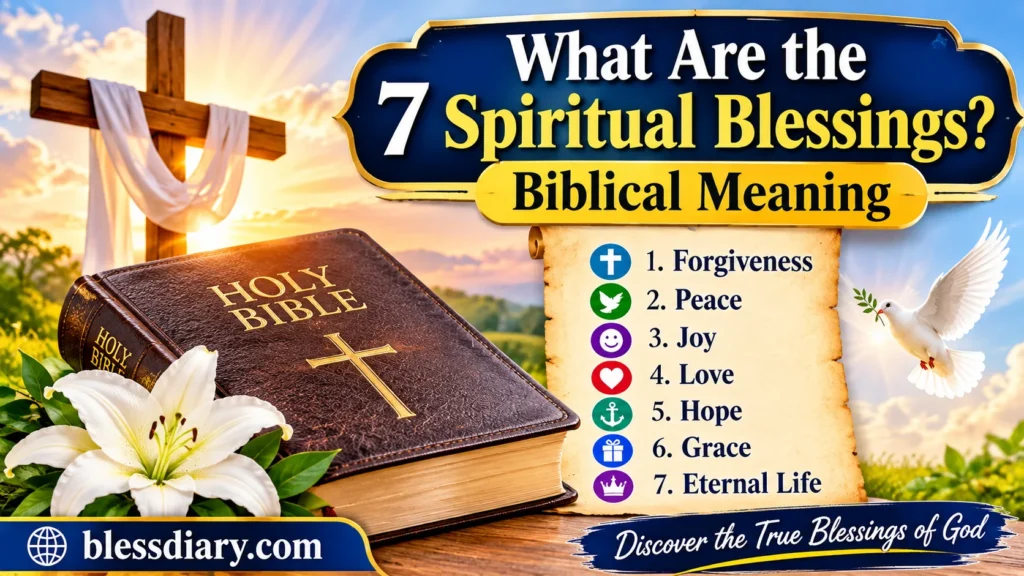
The 7 spiritual blessings are commonly drawn from Ephesians 1:3–14: being chosen by God, adopted as His children, accepted through grace, redeemed and forgiven, given wisdom and understanding, promised an inheritance, and sealed with the Holy Spirit.
These spiritual blessings in Christ describe what God has given believers through Jesus. They are not rewards people must earn or promises of a trouble-free life. They reveal the believer’s identity, relationship with God, and hope in Christ.
What Are the 7 Spiritual Blessings? (Quick Answer)
The seven spiritual blessings commonly identified in Ephesians 1 are:
- Chosen by God — Ephesians 1:4.
- Adopted as God’s children — Ephesians 1:5.
- Accepted through God’s grace — Ephesians 1:6.
- Redeemed and forgiven through Christ — Ephesians 1:7.
- Given wisdom and understanding of God’s will — Ephesians 1:8–10.
- Given an inheritance in Christ — Ephesians 1:11–12.
- Sealed with the Holy Spirit — Ephesians 1:13–14.
The Bible does not present these as an officially numbered list of seven. They are a common way of organizing the spiritual blessings Paul describes in Ephesians 1. Different Bible teachers may group some of the ideas differently, but the central message is that believers receive these blessings through Jesus Christ.
Where Do the Seven Spiritual Blessings Come From?
Understanding Ephesians 1:3–14
The seven spiritual blessings come from Paul’s teaching in Ephesians 1:3–14. At the beginning of this passage, Paul praises God for blessing believers with every spiritual blessing in the heavenly places in Christ.
He then explains what those blessings include. God chose believers in Christ, predestined them for adoption, freely gave His grace, provided redemption and forgiveness through Jesus, revealed the mystery of His will, gave them an inheritance, and sealed them with the promised Holy Spirit.
Paul’s message is important because he wrote about these blessings while facing difficult circumstances. His emphasis was not on financial success, physical comfort, or an easy life. He wanted believers to understand the richness of what they already had through their relationship with Christ.
The repeated expression in Christ is especially meaningful. These blessings are connected to Jesus and God’s saving work through Him.
Why the Bible Does Not Give an Official Numbered List
Ephesians 1 does not contain a sentence saying, “Here are the seven spiritual blessings.” Instead, Paul describes several connected aspects of God’s grace and salvation in one extended passage of praise.
Teachers and Bible study resources sometimes arrange these ideas into seven main categories to make them easier to understand and remember.
For example, some explanations combine wisdom and the revelation of God’s will, while others discuss God’s revealed purpose separately. Therefore, the seven blessings in this article should be understood as a helpful biblical grouping rather than the only possible way to divide the passage.
The 7 Spiritual Blessings Explained
1. Chosen by God (Ephesians 1:4)
The first spiritual blessing is being chosen by God in Christ.
Ephesians 1:4 explains that God chose believers in Christ before the foundation of the world so that they would be holy and blameless before Him.
This shows that God’s saving purpose begins with His initiative, not with human achievement. A person does not have to become impressive, successful, or important before God’s grace becomes meaningful.
Being chosen also carries a purpose. Paul connects this blessing with holiness. It is not simply about feeling special; it is about belonging to God and allowing that relationship to shape the way you live.
For someone who feels overlooked, rejected, or unimportant, this truth can offer encouragement. Human recognition may change, but a believer’s identity in Christ is not measured by popularity, social position, or other people’s approval.
Christians hold different theological interpretations of election, but Ephesians 1 directs readers to recognize God’s gracious purpose and respond with a life that honors Him.
2. Adopted as God’s Children (Ephesians 1:5)
The second blessing is adoption into God’s family through Jesus Christ.
Ephesians 1:5 describes God’s purpose to adopt believers as His children through Jesus Christ, according to His will and pleasure.
Adoption is a powerful picture of belonging. It communicates that believers are welcomed into a relationship with God rather than remaining strangers or outsiders.
In the biblical world, adoption could establish a person’s recognized family position and inheritance rights. Paul’s use of this picture helps readers understand the security and belonging associated with life in God’s family.
This blessing can be especially meaningful during seasons of loneliness, family difficulties, or rejection.
It does not mean every earthly relationship will be perfect. It means that a believer’s deepest identity does not have to depend entirely on human acceptance.
What this blessing means in everyday life: You can approach God with trust, knowing that your relationship with Him is based on His grace in Christ rather than your social status or personal achievements.
3. Accepted Through God’s Grace (Ephesians 1:6)
The third spiritual blessing is receiving God’s grace through Jesus Christ.
Ephesians 1:6 speaks about the glory of God’s grace, which He has freely given to believers in the One He loves.
Grace means receiving God’s favor without earning it through personal performance. It is not a reward for being perfect or a payment for religious activities.
This does not mean God approves of every action a person takes. Rather, acceptance through Christ gives believers a foundation for facing their failures honestly without believing that one mistake makes them worthless.
For example, someone may regret losing their temper, neglecting an important responsibility, or making a decision that hurt another person. God’s grace encourages genuine repentance, forgiveness, and growth instead of hiding from the truth.
Grace also changes how Christians treat others. People who understand that they depend on God’s mercy have a reason to show patience, humility, and forgiveness toward those around them.
What this blessing means in everyday life: Your relationship with God is not built on a record of flawless performance. His grace gives you a reason to return to Him, seek forgiveness, and keep growing.
4. Redeemed and Forgiven Through Christ (Ephesians 1:7)
The fourth spiritual blessing is redemption and forgiveness through Jesus Christ.
Ephesians 1:7 explains that believers have redemption through Christ’s blood and the forgiveness of their trespasses according to the riches of God’s grace.
Redemption carries the idea of release or being set free. Paul connects this freedom with Christ’s sacrifice and the forgiveness of sin.
This blessing is important because guilt and regret can affect the way people see themselves. Someone may continue thinking about past mistakes, wondering whether forgiveness is possible or whether their past will always define them.
The message of Ephesians is that forgiveness comes through Christ, not through a person’s ability to erase the past by trying harder.
However, receiving forgiveness does not mean ignoring the consequences of harmful actions. Genuine repentance may involve admitting wrongdoing, changing behavior, apologizing, and making things right where possible.
What this blessing means in everyday life: Your past mistakes do not have to become your permanent identity. Through Christ, forgiveness is available, and you can move forward with humility and a willingness to live differently.
5. Given Wisdom and Understanding of God’s Will (Ephesians 1:8–10)
The fifth spiritual blessing is wisdom and understanding through God’s grace.
In Ephesians 1:8–10, Paul explains that God has made known the mystery of His will and His purpose to bring all things together under Christ.
This blessing is about understanding God’s revealed plan, especially His purpose centered on Jesus Christ.
It does not mean Christians will automatically know every answer, understand the future, or make perfect decisions. Rather, God has revealed His saving purpose so that believers can understand what matters most.
This understanding can influence ordinary decisions.
For example, someone facing a difficult choice about work, family responsibilities, or relationships can seek wisdom through Scripture, prayer, mature Christian counsel, and careful consideration.
God’s wisdom also helps believers look beyond temporary circumstances and understand their lives in the context of His greater purpose.
What this blessing means in everyday life: You are not left without direction concerning God’s saving purpose. His revealed Word provides a foundation for seeking wisdom and making decisions that reflect your faith.
6. Given an Inheritance in Christ (Ephesians 1:11–12)
The sixth spiritual blessing is receiving an inheritance through Christ.
Ephesians 1:11–12 connects believers with God’s purpose and the inheritance they have in Christ.
An inheritance is something received because of a relationship, not simply something earned through personal effort. In this passage, it points to the hope and future belonging to those who are in Christ.
This blessing reminds Christians that their hope is bigger than the possessions, opportunities, and circumstances they experience today.
A person may lose a job, experience financial difficulties, face disappointment, or go through a season of grief. These experiences can be painful, but they do not have to determine the ultimate direction of their hope.
The promised inheritance is not a guarantee that every Christian will become wealthy or receive everything they want during earthly life. It points toward God’s lasting promises and the future He has prepared for His people.
What this blessing means in everyday life: Your present circumstances are not the whole story. You can face uncertainty with hope because your future in Christ rests on God’s purpose rather than temporary possessions.
7. Sealed With the Holy Spirit (Ephesians 1:13–14)
The seventh spiritual blessing is being sealed with the promised Holy Spirit.
Ephesians 1:13–14 explains that after hearing the word of truth, the gospel of salvation, and believing in Christ, believers were sealed with the Holy Spirit.
In the ancient world, a seal could identify ownership, establish authenticity, or mark something as belonging to someone.
Paul uses this image to describe the believer’s relationship with God. The Holy Spirit is also called the guarantee or pledge of the promised inheritance.
This blessing is especially meaningful because Christianity is not only about remembering what God has done in the past. The Holy Spirit is present in the believer’s life.
The Spirit guides, comforts, convicts, and helps Christians grow in their relationship with God.
However, being sealed with the Spirit does not mean believers will always feel spiritually strong or emotionally encouraged. Christians can experience grief, doubt, and seasons when prayer feels difficult.
The assurance in this passage rests on God’s promise, not on the strength of a person’s emotions.
What this blessing means in everyday life: You belong to God through Christ, and the Holy Spirit is the promised assurance of your inheritance.
What Does Every Spiritual Blessing in Christ Mean?
Ephesians 1:3 says that God has blessed believers with every spiritual blessing in the heavenly places in Christ.
This phrase means that the blessings described by Paul come from God and are received through a relationship with Jesus Christ.
The words “in the heavenly places” point to the spiritual reality and heavenly source of these blessings. They are not limited to earthly possessions or temporary circumstances.
These blessings include:
- A new identity through God’s choice and purpose.
- Belonging to God’s family through adoption.
- Acceptance through His grace.
- Redemption and forgiveness through Christ.
- Understanding of God’s revealed purpose.
- Hope through the promised inheritance.
- The presence and assurance of the Holy Spirit.
The word “every” emphasizes the completeness of God’s spiritual provision in Christ. It does not mean that believers receive everything they desire or that every earthly problem will disappear.
The central message is that God’s saving work provides a foundation for faith, gratitude, and hope that goes beyond changing circumstances.
Spiritual Blessings vs. Material Blessings
Spiritual blessings and material blessings are related to different aspects of life.
Material blessings are tangible gifts or practical provisions, such as food, shelter, employment, health, and financial resources. Spiritual blessings in Ephesians 1 concern what God gives through Christ, including forgiveness, adoption, grace, the Holy Spirit, and eternal hope.
Both can be reasons for gratitude, but they should not be confused.
| Point of ComparisonSpiritual BlessingsMaterial Blessings | ||
|---|---|---|
| Examples | Forgiveness, adoption, grace, the Holy Spirit | Food, housing, income, health |
| Main focus | Relationship with God through Christ | Practical needs and earthly circumstances |
| Foundation | God’s saving work and promises | Tangible provisions and opportunities |
| Circumstances | Rooted in God’s purpose | Can change over time |
| Meaning | Spiritual identity, salvation, and hope | Support and provision in earthly life |
For example, a person may thank God for receiving a new job. That is a meaningful reason for gratitude. However, the spiritual blessing of redemption does not disappear if that person later loses the job.
Similarly, having money or good health does not automatically prove that someone has a stronger relationship with God.
The important distinction: Material blessings concern what a person has or experiences, while the spiritual blessings in Ephesians 1 concern what God has given through Christ.
Spiritual Blessings vs. Gifts of the Holy Spirit vs. Fruit of the Spirit
These three biblical concepts are sometimes confused because they all relate to the Christian life. However, they come from different passages and describe different things.
| Biblical Teaching | Scripture Reference | What It Describes |
|---|---|---|
| Seven spiritual blessings | Ephesians 1:3–14 | God’s saving gifts and the believer’s identity in Christ |
| Seven gifts of the Holy Spirit | Isaiah 11:2–3 | A traditional Christian grouping of the Spirit’s gifts |
| Fruit of the Spirit | Galatians 5:22–23 | Character qualities produced by the Holy Spirit |
What Are the Seven Gifts of the Holy Spirit?
The seven gifts traditionally associated with Isaiah 11:2–3, particularly in Catholic teaching, are:
- Wisdom.
- Understanding.
- Counsel.
- Fortitude.
- Knowledge.
- Piety.
- Fear of the Lord.
These gifts are not the same as the seven spiritual blessings commonly grouped from Ephesians 1.
What Is the Fruit of the Spirit?
Galatians 5:22–23 describes the fruit of the Spirit as:
- Love.
- Joy.
- Peace.
- Patience.
- Kindness.
- Goodness.
- Faithfulness.
- Gentleness.
- Self-control.
These qualities describe the character that the Holy Spirit produces in a believer’s life.
The simple difference: Spiritual blessings describe what God gives believers in Christ, the traditional seven gifts describe gifts of the Holy Spirit, and the fruit of the Spirit describes qualities that grow in a Spirit-led life.
How Do Spiritual Blessings Affect Everyday Christian Life?
The seven spiritual blessings are not only theological ideas to memorize. They can also shape the way Christians understand difficult situations and respond to everyday challenges.
Here is how each blessing can offer practical encouragement:
- When you feel overlooked: Remembering that you are chosen in Christ can help you avoid measuring your worth through other people’s approval.
- When you feel lonely: The blessing of adoption reminds you that belonging to God’s family is part of your identity.
- When you make a mistake: God’s grace encourages you to admit your failure, seek forgiveness, and continue growing.
- When guilt returns: Redemption reminds you that forgiveness is available through Christ, while repentance calls you to take responsibility.
- When you face a difficult decision: God’s revealed purpose provides a foundation for seeking wisdom through Scripture and prayer.
- When you experience loss: The promised inheritance reminds you that temporary circumstances do not define your ultimate hope.
- When your faith feels weak: The Holy Spirit’s seal points you toward God’s promise rather than depending only on your feelings.
These blessings do not remove every hardship or guarantee that life will always go according to your plans. Instead, they give Christians a deeper foundation for facing life with faith, humility, and hope.
How Can Christians Grow in Their Understanding of These Blessings?
Understanding spiritual blessings involves more than memorizing seven points. It means reading the passage carefully and recognizing how God’s work in Christ shapes Christian life.
Here are some practical ways to grow in understanding:
- Read Ephesians 1:3–14: Read the entire passage rather than relying only on a shortened list. Notice how Paul connects each blessing with God’s purpose in Christ.
- Study the surrounding chapters: Ephesians 2 explains salvation by grace, while chapters 4–6 discuss how Christian identity should influence daily conduct and relationships.
- Compare Bible translations: If a phrase such as inheritance, redemption, or heavenly places is difficult to understand, compare reliable translations.
- Pray for understanding: Ask God to help you understand His Word and apply its teaching with humility.
- Put your faith into practice: Let gratitude, forgiveness, love, and responsible actions become part of your everyday life.
The purpose of studying these blessings is not simply to know a list. It is to understand God’s grace and live in response to what He has done through Jesus Christ.
A Short Prayer of Gratitude for Spiritual Blessings
The following is an original Christian devotional prayer, not a direct quotation from the Bible.
Heavenly Father,
Thank You for every spiritual blessing You have given through Jesus Christ. Thank You for Your grace, for welcoming Your people into Your family, and for the forgiveness made possible through Christ.
Help me understand Your will and remember the hope You have given me. When I feel discouraged, remind me of Your promises. When I make mistakes, help me turn toward You with an honest heart. Teach me to live with gratitude, humility, and love.
Guide me through Your Holy Spirit and let my words and actions reflect the faith I profess. Help me value the lasting blessings You have given above temporary things.
In Jesus’ name, Amen.
Common Misunderstandings About Spiritual Blessings
Some misunderstandings can make the meaning of Ephesians 1 confusing. These are important distinctions to remember.
1. The Bible Lists Exactly Seven Spiritual Blessings
The Bible does not number the blessings in Ephesians 1 as an official list of seven. Seven is a common teaching arrangement of the passage’s main themes.
2. Spiritual Blessings Guarantee Wealth and Success
Ephesians 1 does not promise that every Christian will become wealthy, enjoy perfect health, or avoid hardship. Its focus is God’s saving work through Christ.
3. Spiritual Blessings Must Be Earned
Paul emphasizes God’s grace. These blessings are not rewards that people purchase through good behavior or religious rituals.
Christian growth and good works matter, but they are a response to God’s grace rather than a payment for salvation.
4. Spiritual Blessings Are the Same as the Gifts of the Holy Spirit
The two teachings come from different biblical passages. The spiritual blessings are commonly drawn from Ephesians 1, while the traditional seven gifts are associated with Isaiah 11.
5. Spiritual Blessings Are Only for the Future
Ephesians describes believers as already blessed in Christ and sealed with the Holy Spirit. At the same time, the passage points toward the future completion of God’s promises.
6. A Christian Will Always Feel Blessed
Spiritual blessings do not mean that a believer will always feel happy or experience comfortable circumstances. Paul himself discusses these blessings while facing imprisonment.
Their foundation is God’s grace and promises, not changing emotions.
Frequently Asked Questions
What are the 7 spiritual blessings in the Bible?
The seven spiritual blessings commonly drawn from Ephesians 1:3–14 are being chosen by God, adopted as His children, accepted through grace, redeemed and forgiven, given wisdom and understanding of His will, promised an inheritance, and sealed with the Holy Spirit.
Are the seven spiritual blessings listed in Ephesians 1?
Ephesians 1 describes these blessings but does not number them as seven. The seven-item list is a common way of organizing Paul’s teaching. Some Bible teachers may group the passage’s ideas differently.
What does every spiritual blessing in heavenly places mean?
It means that God has given believers spiritual gifts through Jesus Christ. These blessings come from God and concern the believer’s relationship with Him, including salvation, forgiveness, adoption, and the Holy Spirit. They are not promises of material prosperity.
Are spiritual blessings the same as the gifts of the Holy Spirit?
No. The spiritual blessings in Ephesians 1 describe what God gives believers through Christ. The seven gifts traditionally associated with Isaiah 11:2–3 are a separate Christian teaching, particularly emphasized in Catholic tradition.
What is the difference between spiritual blessings and the fruit of the Spirit?
Spiritual blessings describe God’s saving gifts and the believer’s identity in Christ. The fruit of the Spirit, described in Galatians 5:22–23, refers to qualities such as love, joy, peace, patience, kindness, and self-control that the Holy Spirit produces in a believer’s life.
How do Christians receive spiritual blessings?
According to Ephesians 1, these blessings are received through a relationship with Jesus Christ and faith in the gospel. They are gifts of God’s grace, not rewards earned through rituals or personal achievements.
Can spiritual blessings be lost?
Christian traditions differ in how they explain perseverance, assurance, and the possibility of falling away. Ephesians 1 emphasizes God’s purpose and the Holy Spirit’s seal as a guarantee of the inheritance. Christians should consider the wider biblical teaching and consult a trusted pastor within their own tradition.
Do spiritual blessings mean a Christian will have a prosperous life?
No. The spiritual blessings in Ephesians 1 focus on redemption, forgiveness, adoption, grace, the Holy Spirit, and eternal hope. They do not guarantee financial wealth, perfect health, or a life without suffering.
How can I remember the seven spiritual blessings?
Read Ephesians 1:3–14 and remember these seven themes: chosen, adopted, accepted through grace, redeemed and forgiven, given wisdom, promised an inheritance, and sealed with the Holy Spirit. You can also write each one beside its Bible reference for personal study.
Final Thought
The seven spiritual blessings in Ephesians 1 remind Christians that their deepest hope is found in Jesus Christ. Being chosen, adopted, accepted through grace, redeemed, forgiven, given an inheritance, and sealed with the Holy Spirit describes a life rooted in God’s saving purpose.
These blessings are not a promise that every day will be easy. They are a reminder that God’s grace, the work of Christ, and the promise of the Holy Spirit provide a lasting foundation for faith and hope.
DISCOVER MORE ARTICLES
Faithful Blessings Bouquet: Price, Flowers and Uses
New Month Prayers and Blessings for a Fresh Start
Scriptures About Blessings: 40+ Bible Verses to Share

Shahzad is the Founder of BlessDiary, sharing Christian prayers, blessings, Bible-based encouragement, and inspiring messages to strengthen faith and bring hope to everyday life.